
Small Ways to Increase Movement (That Actually Stick)
Small Ways to Increase Movement (That Actually Stick)
“Lack of activity destroys the good condition of every human being, while movement and methodical physical exercise save it and preserve it.” —Plato
If you want more energy, better mood, and steadier strength without overhauling your schedule, start here: choose one tiny movement habit you can repeat most days.
Even small amounts of physical activity can support physical and mental health, and your everyday movement outside of workouts counts.[1]
If you’ve ever thought, “I know what to do… I just can’t seem to stick with it,” you’re not alone.
Most people don’t struggle because they are lazy or “unmotivated.” More often, the plan is too big, too rigid, or too far removed from real life. The good news is that meaningful movement does not have to start with a gym membership or a perfect routine.
Sometimes the most powerful change begins with one simple question:
What would having more energy allow you to do?
That answer is your why. And your why can guide you toward simple, repeatable movement habits that support your health over time.
Why small movement matters more than you think
Movement is not an “extra.” It is one of the ways we support mobility, mood, blood sugar balance, and long-term independence.
And it counts in more forms than we give it credit for. Beyond structured exercise, your day-to-day movement, often called NEAT (non-exercise activity thermogenesis), can make a meaningful difference.
The goal is not to move perfectly.
The goal is to keep moving in ways that fit your life.
A coaching mindset: consistency beats intensity
Big plans can feel inspiring, but small steps are what most of us can repeat.
Instead of asking, “What’s the best workout?” try asking:
What is the smallest version of movement I could do on my busiest day?
What would make this easier to start?
When a habit is easy to begin, it’s easier to keep.
10 small ways to increase movement (pick one to start)
Choose one idea that feels realistic. If you’re already doing some of these, that counts. You can build from what’s already working.
Stand during phone calls
Park a little farther away (even one extra row)
Take one flight of stairs (up or down)
Do calf raises while brushing your teeth
Stretch while waiting for the kettle or microwave
Walk for 2 minutes after dinner (then add 1 minute when it feels easy)
Use commercial breaks as a movement cue (stairs, marching in place, gentle mobility)
Keep a resistance band nearby for a few reps while watching TV
Choose the “no drive-through” option when possible and walk in
Set a simple reminder to move once per hour (stand, stretch, a short lap)
Reduce friction: make movement the easiest choice
People often blame willpower, but sustainable change is usually about designing for follow-through.
Try one friction-reducer:
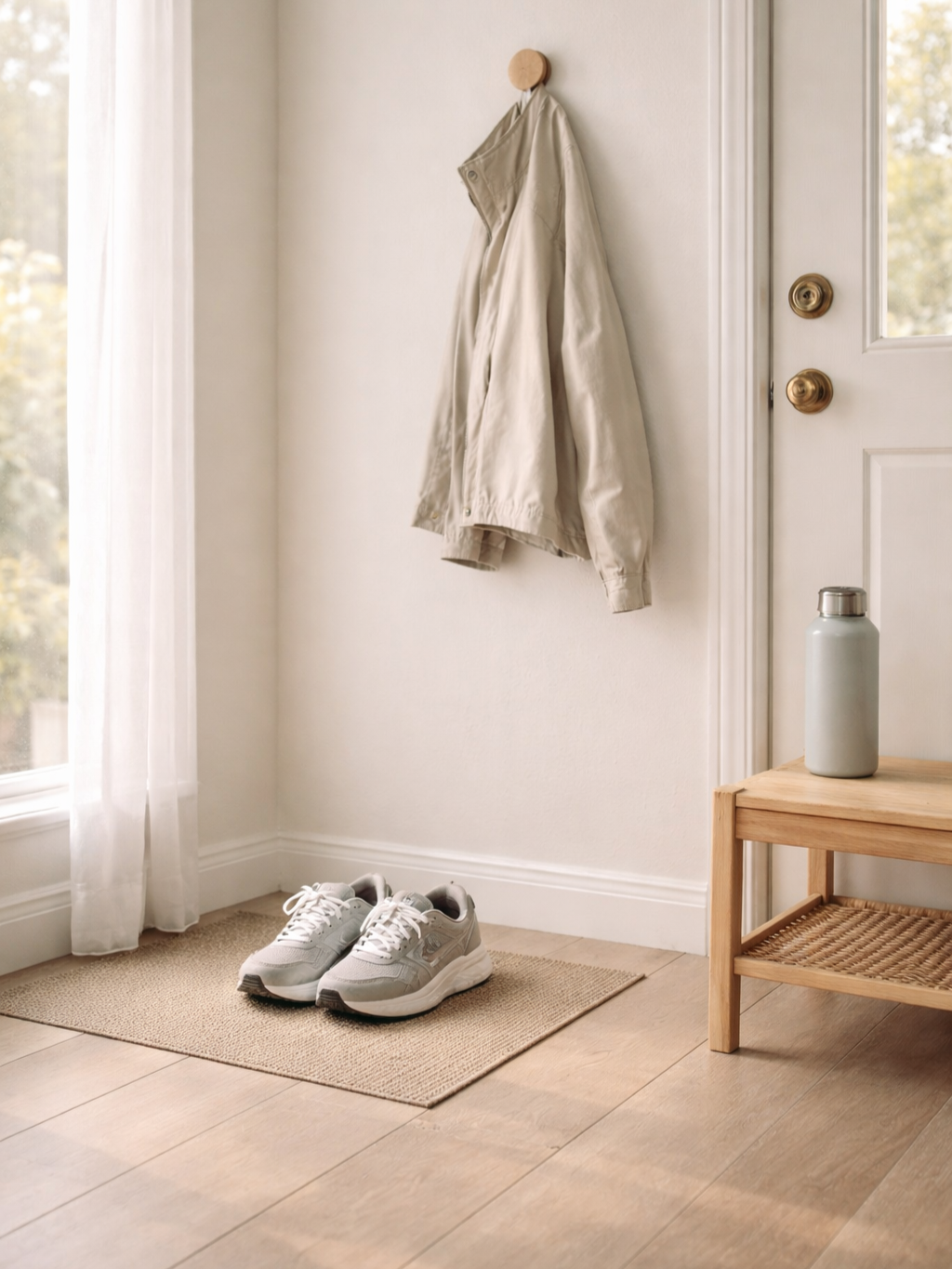
Keep sneakers by the door.
Put a jacket where you will see it.
Choose one “default walk route.”
Make it social. Text a friend when you do your 2-minute walk.
If you’re not sure what’s realistic, use this quick self-check:
On a scale of 1–10, how confident am I that I could do this 3 days this week?
If your number is below a 7, shrink the step until it feels doable.
Anchor movement to something you already do
Habits stick best when they’re attached to routines you already have.
Try:
“After I pour my coffee, I stretch for 30 seconds.”
“After I eat lunch, I walk for 2 minutes.”
“After I brush my teeth, I do 10 calf raises.”
Take a breath and consider
What would feeling stronger make easier in your day?
How would less joint pain improve your day-to-day life?
What would you like to be able to do more of, without needing to recover afterward?
You don’t have to answer perfectly. You’re simply getting honest about what you want your health for.
A gentle next step (keep it simple)
Choose one idea from the list above and try it for 7 days. Aim for “most days,” not “every day.” Track it with a checkmark, not a judgment.
Want support staying consistent?
If you’d like more support turning good intentions into habits that actually fit your life, coaching with me is collaborative and practical:
We co-create a vision for your ideal health.
You choose the focus for our sessions.
We set achievable goals and adjust them as we learn what works for you.
Book a discovery call if you’re ready for personalized support.
If you’re not ready for coaching yet, you can also join my email list by downloading the Free Wellness guide for weekly, coaching-style insights you can apply in real life.
